
Clean & Green Environment Solution
DM Plant Manufacturers in Maharashtra, India
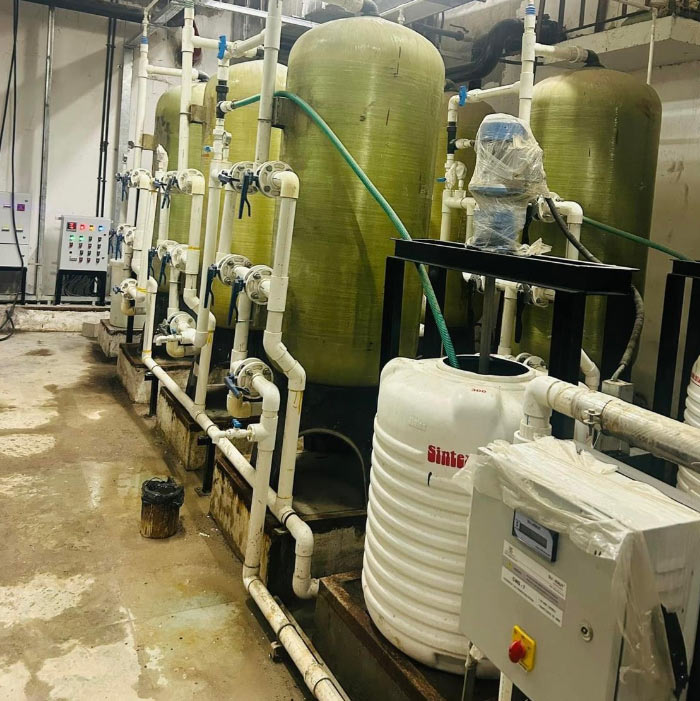


Ideal System & Services is a trusted name among DM Plant manufacturers, suppliers, and exporters in Maharashtra, India, delivering high-performance demineralization systems for industrial and process water applications. We design and manufacture robust, low-maintenance DM plants that remove dissolved salts and minerals, ensuring ultra-pure water for critical operations.
Our demineralization plants are engineered using proven ion exchange technology and high-quality resin systems to deliver consistent output water quality that meets stringent industrial standards. From compact units for small industries to large-capacity fully automatic plants for power stations and pharmaceutical facilities, we manufacture customized solutions based on your water analysis and production requirements.
High-purity DM water acts as a protective shield for boilers, turbines, cooling systems, and precision process equipment—preventing corrosion, scaling, and costly downtime. With our solutions, industries achieve operational reliability, improved product quality, and long-term cost savings.
Demineralization Plant – High Purity Water for Industrial Excellence
A Demineralization (DM) Plant is designed to remove dissolved mineral salts such as calcium, magnesium, sodium, chloride, sulfate, and silica from raw water using ion exchange technology. The output is mineral-free water with very low conductivity and negligible Total Dissolved Solids (TDS).
Industries across Mumbai, Pune, Nagpur, Nashik, Aurangabad, Delhi NCR, Ahmedabad, Chennai, Hyderabad, Bengaluru, and Kolkata depend on DM water to maintain process integrity and protect high-value machinery.
Working Principle of DM Plant
Our DM plants operate on a scientifically proven ion exchange process that ensures reliable and consistent water purity.
1. Cation Exchange Process
Raw water first passes through a cation exchange resin column. The resin contains hydrogen (H⁺) ions that exchange with positively charged mineral ions such as:
- Calcium (Ca²⁺)
- Magnesium (Mg²⁺)
- Sodium (Na⁺)
These hardness-causing ions are removed and replaced with hydrogen ions.
2. Anion Exchange Process
The water then flows into the anion exchange column containing hydroxide (OH⁻) ions. The resin exchanges hydroxide ions with negatively charged ions such as:
- Chloride (Cl⁻)
- Sulfate (SO₄²⁻)
- Nitrate (NO₃⁻)
- Silica
3. Formation of Pure Water
The released hydrogen (H⁺) and hydroxide (OH⁻) ions combine to form H₂O, resulting in demineralized water.
4. Mixed Bed Polishing (Optional)
For ultra-low conductivity requirements, a mixed bed unit containing both cation and anion resins further polishes the water to achieve extremely high purity levels.
Types of DM Plants We Manufacture
As experienced DM plant manufacturers in Maharashtra, we provide various configurations based on purity requirements and application.
Two-Bed DM Plant
This system consists of separate cation and anion exchange columns. It is suitable for general industrial applications where moderate purity levels are sufficient.
Ideal For:
- Boiler feed water
- Cooling tower makeup
- Process industries
Mixed-Bed DM Plant
A single column contains a mixture of strong acid cation and strong base anion resins. It produces very low conductivity water and is suitable for high-purity applications.
Ideal For:
- Pharmaceutical manufacturing
- Electronics industry
- Laboratories
- High-pressure boilers
RO + DM Plant Combination
Reverse Osmosis systems are often used as pre-treatment before DM plants to reduce TDS load, improve resin life, and lower regeneration costs.
EDI-Based Demineralization System
Electrodeionization combines ion exchange membranes and electrical current to produce continuous ultra-pure water without chemical regeneration. Common in pharmaceutical and biotech industries.
Packaged DM Plants
Compact skid-mounted systems for small-scale industrial or institutional use.
Technical Specifications of DM Plant
| Parameter | Specification |
|---|---|
| Capacity Range | 1 m³/hr – 1000 m³/hr (Customizable) |
| Process | Cation → Anion → Mixed Bed |
| Output Conductivity | < 1 µS/cm |
| TDS | 0 – 5 ppm |
| Silica | < 0.1 ppm |
| Operating Pressure | 2.5 – 3.5 kg/cm² |
| Temperature | 5 – 45°C |
| Resin Type | SAC, SBA, WBA, Mixed Bed |
| Regeneration | HCl/H₂SO₄ (Cation), NaOH (Anion) |
| Skid Material | MS Rubber Lined / FRP / SS-316 |
| Automation | Manual / Semi-Automatic / PLC Based |
Each plant is designed considering feed water quality, flow rate, regeneration efficiency, and long-term performance.
Key Features of Our Demineralization Plants
- Superior Water Purity: Consistently produces low conductivity water suitable for critical industrial processes.
- Protection Against Scaling & Corrosion: Eliminates hardness and mineral deposits, protecting boilers, turbines, and pipelines.
- Optimized Resin Regeneration: Efficient regeneration reduces chemical consumption and operational cost.
- Modular & Compact Design: Space-efficient skid-mounted systems for easy installation.
- Durable Construction: Corrosion-resistant materials ensure long service life even in harsh industrial environments.
Applications of DM Plant
Demineralization plants are essential in industries where mineral-free water is critical for performance and product quality.
1. Boiler Feed Water Treatment
High-pressure boilers require mineral-free water to prevent scale formation and tube failure. Even small amounts of hardness can cause serious damage.
Benefits:
- Improved heat transfer efficiency
- Reduced fuel consumption
- Extended boiler life
- Lower maintenance costs
Power plants and manufacturing units in Nagpur, Jamnagar, Mumbai, and Chennai rely heavily on DM plants for boiler operations.
2. Pharmaceutical & Biotech Industry
Pharma facilities in Hyderabad, Pune, Ahmedabad, and Bengaluru use DM water in:
- Drug formulation
- Equipment washing
- Purified Water (PW) production
- Laboratory applications
Water purity directly impacts product safety and regulatory compliance.
3. Cooling Towers & HVAC Systems
Mineral-rich water causes scaling in cooling towers and heat exchangers. DM water prevents:
- Mineral deposits
- Reduced heat exchange efficiency
- Frequent chemical dosing
Commercial complexes and industrial plants benefit from longer equipment life.
4. Textile & Dyeing Industry
Minerals interfere with dyes, causing uneven coloration and fabric defects. DM water ensures:
- Bright, consistent colors
- Reduced rejection rates
- Improved fabric quality
Textile hubs like Surat, Tirupur, and Ludhiana widely use DM plants.
5. Chemical & Process Industry
In chemical manufacturing, mineral impurities can affect reactions and final product quality. DM water provides consistent process control.
6. Electronics & Semiconductor Industry
Ultra-pure water is required to prevent micro-level contamination in sensitive electronic components.
Major Indian Cities Where DM Plants Are Widely Used
- Mumbai
- Pune
- Nagpur
- Nashik
- Aurangabad
- Delhi NCR
- Ahmedabad
- Chennai
- Hyderabad
- Bengaluru
- Kolkata
These industrial hubs require reliable demineralized water systems for continuous operations.
Why Choose Ideal System & Services for DM Plant?
- Experienced Indian Manufacturer: We design plants specifically for Indian raw water conditions and industrial demands.
- Customized Engineering: Every DM plant is engineered after detailed water analysis and capacity assessment.
- Quality Components & Resin: We use high-grade ion exchange resins and durable vessel materials.
- Export-Ready Systems: As exporters, we manufacture systems that meet international quality standards.
- Strong Technical Support: Installation guidance, commissioning support, operator training, and after-sales service.
Long-Term Value with Demineralization Technology
Investing in a DM plant is not just about water purification—it is about protecting your infrastructure, improving product quality, and ensuring uninterrupted production. Mineral contamination leads to corrosion, equipment failure, and production losses. A properly designed demineralization system eliminates these risks.
Ideal System & Services delivers reliable, cost-effective, and performance-driven DM plants that help industries operate efficiently and sustainably.
FAQs – DM Plant
Regeneration frequency depends on feed water TDS and plant capacity. Typically, regeneration is required once the resin reaches its exchange capacity.
Yes, DM water is ideal for high-pressure boilers as it prevents scaling and corrosion.
RO reduces dissolved solids using membranes, while DM removes mineral ions through ion exchange, producing lower conductivity water.
With proper pre-treatment and regeneration, resin typically lasts 3–5 years depending on usage and feed water quality.
Yes, DM plants can be supplied in manual, semi-automatic, or fully automatic PLC-based systems.